


Fiberglass Doors






How to Choose a Fiberglass Door
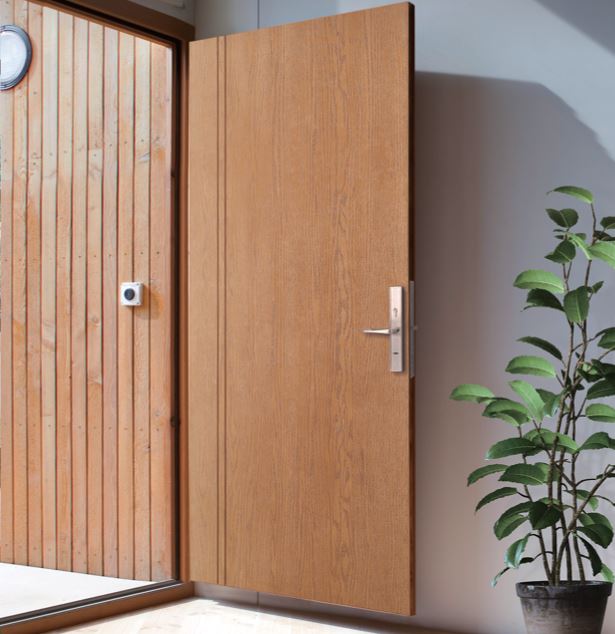
Fiberglass entry doors give you the look of wood with none of its maintenance, and better insulation than steel. The skin is a moulded composite that will not dent from a hockey puck, will not rust where road salt splashes it, and will not swell or warp through a Prairie freeze-thaw cycle. Those are the three failure modes that end most exterior doors early. Norden Seal’s FR series covers smooth and deep-woodgrain finishes across 2-panel, 3-panel, 4-panel and 6-panel layouts, with decorative glass available in every model.
Fiberglass wins on three counts. It is dimensionally stable, so it does not swell in humidity or contract in cold. It takes a deep woodgrain moulding that reads convincingly as stained timber from the curb. And its polyurethane core gives it a strong insulating value across the whole slab. It is the door to choose if your entrance takes direct weather, if you want a stained-wood appearance without the sanding and refinishing, or if you have had a steel door dent or rust on you before.
Steel is still the better choice in two situations. When the budget is tight and the door sits under a deep, protected porch, and when maximum impact resistance at the lowest cost is the priority. We build both, and an honest estimator will tell you which one your opening actually calls for rather than selling you up. Compare the range on our traditional steel doors page.
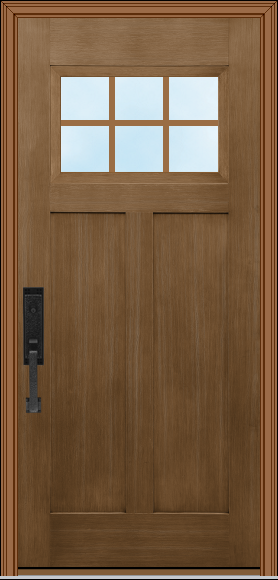
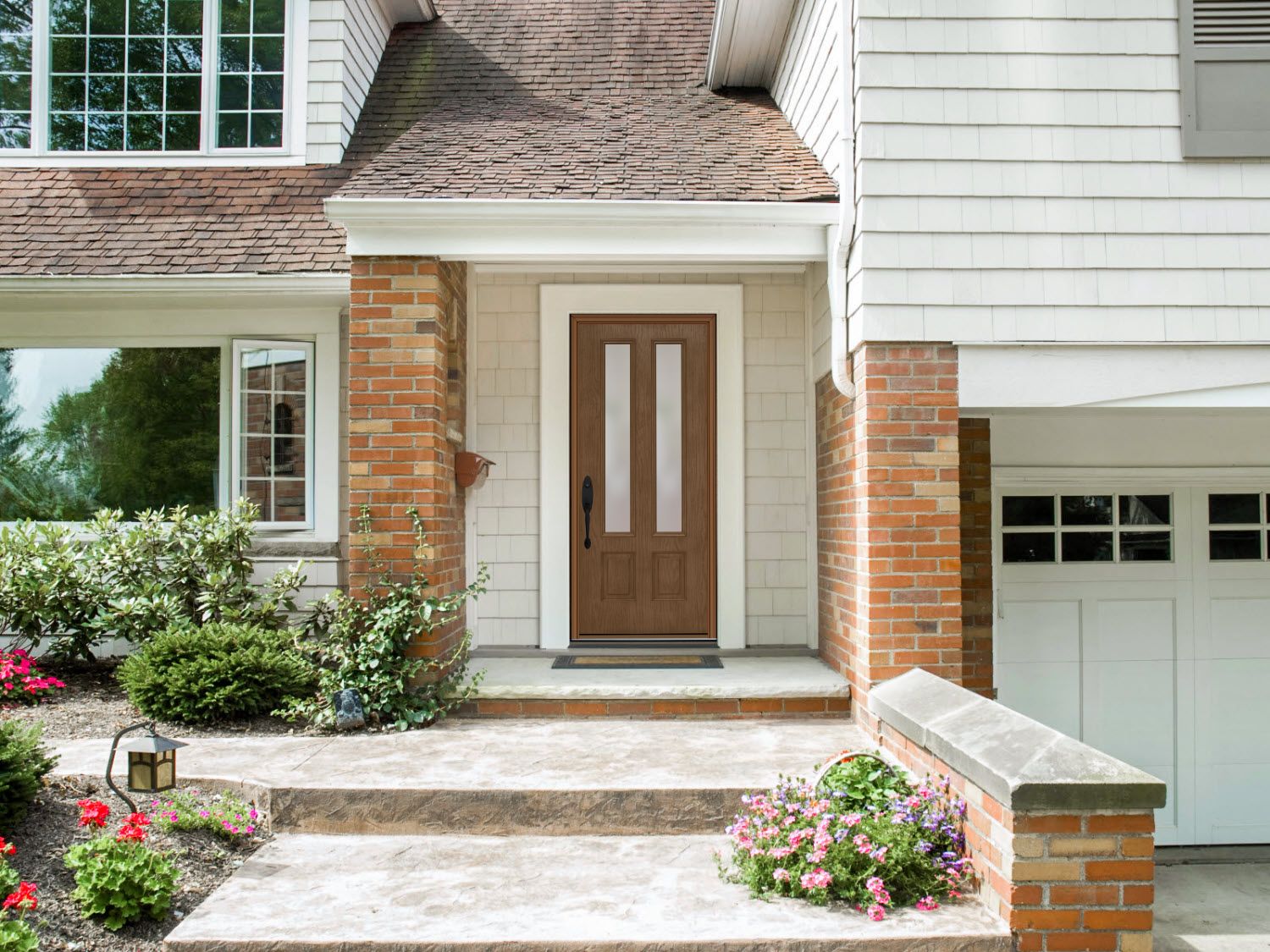
Panel count sets the character of the door. A two-panel door uses two large flat or raised panels, often with a camber, or arched, top rail. It is clean, contemporary-leaning, and the easiest style to pair with a large decorative glass insert. Three and four-panel doors put more horizontal division across the slab and suit transitional homes that are neither strictly modern nor strictly traditional. A six-panel door is the classic Colonial layout: it reads traditional, pairs naturally with Georgian grille patterns and cathedral-style glass, and is the safest choice on a brick elevation.
Fiberglass takes both paint and stain. Deep woodgrain skins are made to be stained, with oak and mahogany grain patterns the usual starting points, while smooth skins take a painted finish that stays flat and even for years. We offer a wide colour range, and any colour or configuration outside the standard range is available on request. We use high-quality exterior-grade paint, because a door finish that chalks after three summers is not a saving.
The performance numbers are published, not implied. Our certified doors meet ENERGY STAR® efficiency standards, carry NFRC ratings for U-factor and solar heat gain coefficient, and comply with CSA A440 structural requirements. Select models are built with fire-rated cores. A fiberglass slab with a polyurethane core and a modern multi-point seal is a genuinely different product from the hollow steel door it is replacing. Most homeowners notice the draught at ankle height disappearing before they notice anything on the bill.
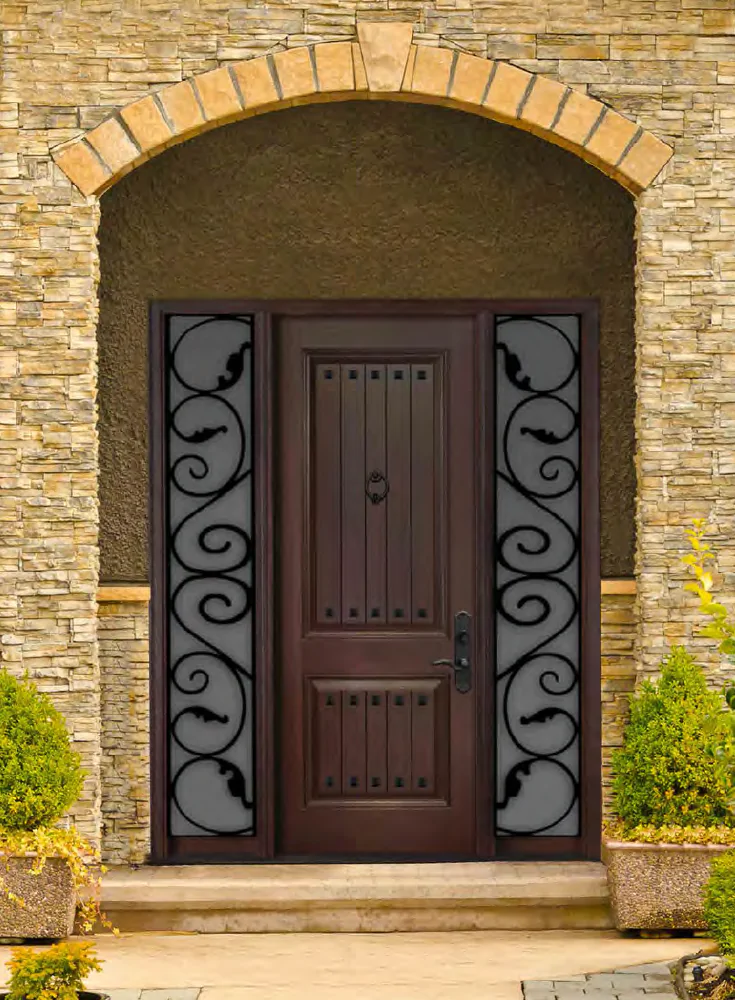
Every FR model can be specified with sidelites and a transom to widen the entrance, using narrower versions of the same decorative glass so the entrance reads as one composition. Add a multi-point lock on any main entrance. Norden Seal manufactures in Manitoba and installs across Winnipeg, Calgary and Regina, so the door and the installation carry the same warranty.
Fiberglass Door Questions
Are fiberglass doors better than steel doors?

For most Canadian entrances, yes. Fiberglass resists denting, will not rust, and stays dimensionally stable through freeze-thaw cycles, while a comparable steel door can dent permanently and can corrode where the skin is scratched. Steel remains competitive on upfront cost and raw impact strength, so a protected entrance on a tight budget is still a reasonable case for steel.
How long do fiberglass doors last?
A quality fiberglass door installed correctly outlasts most other components of an entrance. The weatherstripping and the finish will need attention long before the slab does. The practical lifespan is measured in decades rather than years, provided the door is hung square and the threshold is properly flashed. Poor installation, not material failure, is what ends most door lifespans early.
Can fiberglass doors be painted or stained?
Both. Smooth-skin fiberglass doors are designed for paint and hold a flat, even finish. Deep-woodgrain skins are designed for stain, and the moulded grain takes stain much the way real timber does, which is what makes them convincing at curb distance. Use an exterior-grade product rated for fiberglass rather than a general-purpose wood stain.
Do fiberglass doors need maintenance?
Very little. Wash the slab with mild soap and water a couple of times a year, check the weatherstripping each autumn before the first freeze, and re-coat a stained finish when it starts to look tired, typically several years apart depending on exposure. There is no sanding, no rust treatment and no annual repainting. Our guide to maintaining fiberglass doors in Canadian climates covers the seasonal checks in detail.
What is a 6-panel fiberglass door?
A 6-panel door has six recessed or raised rectangular panels arranged in three rows across the slab, the traditional Colonial layout. It is the most common style on North American homes and the safest match for brick, stucco and traditional elevations. Norden Seal’s FR collection includes 6-panel models alongside 2, 3 and 4-panel layouts.
Do fiberglass doors qualify for energy rebates?
Eligible ENERGY STAR® certified doors qualify under several Canadian programs, including the Efficiency Manitoba rebate, the Manitoba Hydro loan and the Canada Greener Homes Loan for eligible primary residences. Program terms change, so use the rebate estimator on this page for a current figure and confirm the details with your estimator before you order.
Where does Norden Seal install fiberglass doors?
We manufacture in Manitoba and install with our own crews from three offices: Winnipeg, Calgary and Regina. Because we make the door and hang it, the warranty covers both, so there is no gap between a product defect and an installation issue for you to fall into.